Is the XPENG electric suv G6 the Right Choice for Australian Drivers?
、
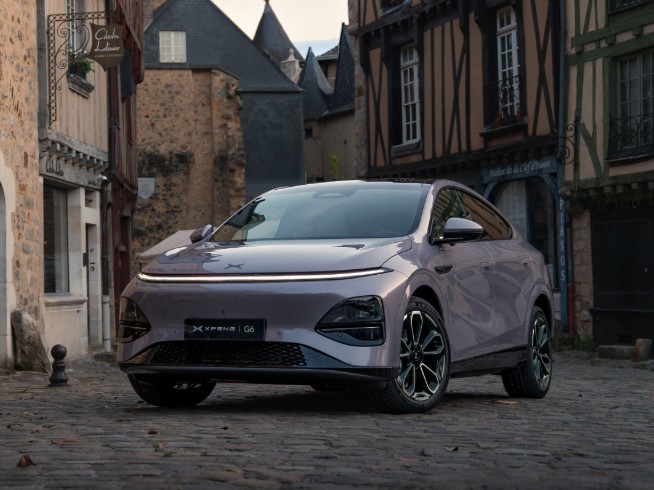
Yes. For many Australian buyers in 2026, the G6 is a credible family EV if home charging and nearby service support are available. Pricing starts at $51,800 before on-road costs for the RWD Standard Range, rising to $56,800 for the Long Range and $63,800 for the AWD Performance. Official WLTP range reaches 525 km, while the 80.8 kWh Long Range battery can accept up to 451 kW DC and is rated for a 10–80% charge in 12 minutes under suitable conditions. ANCAP gives the G6 five stars, including 88% Adult Occupant Protection and 86% Child Occupant Protection.
Those numbers put the G6 into a useful position between mainstream family SUVs and more expensive performance EVs. The 2026 Australian range covers three fairly different uses rather than offering one battery and changing only cosmetic equipment, so comparing the versions first makes the rest of the ownership picture easier to judge.
| Australian specification | RWD Standard Range | RWD Long Range | AWD Performance |
|---|---|---|---|
| Price before on-road costs | $51,800 | $56,800 | $63,800 |
| Battery capacity | 68.5 kWh gross | 80.8 kWh gross | 80.8 kWh gross |
| WLTP range | 480 km on 18-inch wheels | 525 km | 510 km |
| Maximum power | 185 kW | 218 kW | 358 kW |
| Torque | 440 Nm | 440 Nm | 660 Nm |
| 0–100 km/h | 6.94 sec | 6.7 sec | 4.13 sec |
| Maximum DC rate | 382 kW | 451 kW | 451 kW |
The $5,000 step from Standard Range to Long Range buys 12.3 kWh more gross battery capacity and adds up to 45 km of official range. It also raises peak DC charging from 382 kW to 451 kW, while power increases from 185 kW to 218 kW. For households that regularly leave metropolitan areas, those differences are easier to use than the Performance model's much quicker acceleration.
The Standard Range remains well suited to normal commuting. XPENG quotes energy use of 16.6 kWh/100 km on its standard 18-inch wheels and 16.9 kWh/100 km on optional 20-inch wheels, showing how wheel selection alone changes rated efficiency by about 1.8%. Its 480 km WLTP figure also falls to 470 km when fitted with the larger wheels.
That wheel comparison is useful because official range is not the same as the distance every owner will see. XPENG states that speed, passengers, vehicle load, outside temperature, air-conditioning use, terrain and vehicle condition can all alter the result. A motorway trip at 110 km/h with four people and luggage should therefore be planned with more margin than a 2026 suburban commute at lower speeds.
Charging partly offsets that uncertainty. The Long Range and Performance versions use an 80.8 kWh LFP battery and can accept up to 451 kW DC, while XPENG quotes 10–80% in 12 minutes under suitable conditions. Going from 10% to 80% represents a 70-percentage-point increase, although real charging time still depends on battery temperature, starting charge and charger output.
A 451 kW peak figure should not be read as a promise that every Australian public charger will deliver 451 kW. The car, charger and battery conditions all have to support the rate at the same time.
That distinction matters more outside major motorway corridors, where charger power and availability differ from site to site. XPENG uses the Australian Type 2 standard for AC charging and CCS2 for DC charging, and its Australian FAQ notes that some Tesla Supercharger locations are open to non-Tesla CCS2 vehicles, while others are not.
Home charging therefore remains the simpler arrangement for most owners. All three versions support 11 kW AC charging; XPENG quotes 5–100% in 7.3 hours for the 68.5 kWh Standard Range and 9.2 hours for the 80.8 kWh Long Range and Performance models. An overnight session can cover normal weekday use without relying on public charging every few days.
Battery chemistry also suits that routine. XPENG specifies LFP packs across the 2026 G6 range and advises owners that regular AC charging is preferable for day-to-day use, with periodic charging to 100% helping battery-management calibration. Its Australian battery guidance suggests a full charge around every two weeks or 1,000 km, rather than treating fast DC charging as the normal home routine.
Moving from energy use to family use, the XPENG electric suv provides 571 litres of luggage capacity with the rear seats upright and 1,374 litres with them folded. Five seats, a 2,890 mm wheelbase and a 1,920 mm body width give it dimensions closer to a conventional medium family SUV than a compact crossover.
Width deserves attention before purchase. At 1,920 mm wide, the G6 can feel substantial in older apartment parking spaces or narrow garages, while its 5.8 m turning radius is more relevant to daily parking than its 202 km/h maximum speed. Buyers with tight home parking should physically measure the bay rather than relying on the SUV label alone.
Payload is another useful figure for families. XPENG lists approximately 470 kg for the Standard Range, 475 kg for the Long Range and 470 kg for the Performance model. Five adults plus luggage can use much of that allowance, so owners planning repeated fully loaded trips should look at payload as carefully as the 525 km WLTP range.
Performance is more generous than most family use requires. The Long Range reaches 100 km/h in 6.7 seconds with 218 kW and 440 Nm, while the AWD Performance produces 358 kW and 660 Nm and cuts the same run to 4.13 seconds. Despite having around 64% more power than the Long Range, the Performance still carries a 510 km WLTP rating.
That extra output comes with higher rated consumption. XPENG lists 17.9 kWh/100 km for the RWD Long Range and 18.4 kWh/100 km for the AWD Performance, a difference of about 2.8%. For an owner covering 15,000 km per year, the efficiency difference is relatively small compared with the purchase-price gap, but the extra acceleration will have little practical use in normal suburban traffic.
Safety presents a more measurable comparison than acceleration. ANCAP tested the G6 under its 2024 protocols and awarded five stars across all variants covered by the rating. It scored 88% for Adult Occupant Protection, 86% for Child Occupant Protection, 81% for Vulnerable Road User Protection and 80% for Safety Assist.
The equipment behind those scores includes dual frontal airbags, side chest and side head airbags, plus a centre airbag between the front occupants. ANCAP also lists autonomous emergency braking for several crash situations, lane-keeping assistance, lane-departure warning, emergency lane keeping and advanced speed assistance as standard equipment.
Driver-assistance equipment goes beyond the ANCAP scoring categories. The Australian G6 specification includes adaptive cruise control, lane centring, blind-spot detection, rear cross-traffic alert, driver-state monitoring, a surrounding-view camera system and automated parking functions. Buyers should still test the assistance settings during a 2026 test drive because intervention strength and warning behaviour can affect everyday comfort.
Cabin operation deserves the same hands-on check. The G6 uses a 15.6-inch central touchscreen alongside a 10.25-inch digital instrument display, with Apple CarPlay, Android Auto, voice control and over-the-air software updates. Someone moving from a car with dedicated climate and media buttons may need more time to learn screen-based controls than someone already familiar with software-heavy EV interiors.
Ownership support has changed materially in 2026. XPENG Australia now lists a 7-year/unlimited-kilometre whole-vehicle warranty for private use, while commercial vehicles receive 7 years or 160,000 km. The traction battery, battery-management system, motor and Intelligent Power Unit are covered for 8 years or 160,000 km.
Roadside assistance runs for seven years from first registration, while scheduled maintenance is required every 12 months or 20,000 km, whichever comes first. That interval lets a driver covering 15,000 km annually service primarily by time, while somebody travelling 30,000 km each year reaches the kilometre limit sooner.
Service location still needs checking before signing an order. XPENG's Australian operation is newer than long-established national dealer networks, even though the company states that authorised service support is expanding and now operates through a factory-backed local business. A buyer 20 km from an authorised workshop has a different ownership situation from someone several hundred kilometres away.
Resale history is similarly shorter because the G6 only entered Australia in October 2024, according to ANCAP. A seven-year warranty helps later owners while it remains valid, but there is not yet a decade of Australian used-market data from which to judge depreciation patterns with the confidence available for older brands.
For a metropolitan household with a garage, regular overnight charging and occasional interstate travel, the RWD Long Range has the broadest specification balance: $56,800 before on-road costs, 525 km WLTP, 451 kW peak DC charging, 218 kW of power and a 475 kg payload. It costs about 9.7% more than the Standard Range while adding battery capacity, range and charging capability.
The Standard Range is easier to justify when daily travel is modest and the car returns to a charger most nights. Its 68.5 kWh LFP battery, 480 km WLTP rating on 18-inch wheels and 382 kW maximum DC rate already exceed what many commuters need, while the $5,000 saving can cover a home wallbox, insurance and several years of scheduled servicing.
The AWD Performance suits a narrower use case. Paying $7,000 above the Long Range brings 358 kW, 660 Nm and 4.13-second acceleration, but official range drops from 525 km to 510 km and rated energy use rises from 17.9 to 18.4 kWh/100 km. Families buying mainly for range and commuting receive little practical benefit from the extra output.
Regional ownership calls for a different check before purchase: map the actual routes used each month, note CCS2 charger locations and power ratings, and identify the nearest authorised service point. A 12-minute 10–80% claim is useful only where suitable charging equipment exists, while the seven-year warranty is more convenient when service access is reasonably close.
For Australian buyers who can satisfy those two conditions, the G6 offers unusually strong numbers at its 2026 price: up to 525 km WLTP range, 571 litres of luggage space, five-star ANCAP safety, an 8-year/160,000 km high-voltage system warranty and charging hardware rated far above many public chargers currently encountered in everyday use.